August 23, 2025
|อ่าน 9 นาที

การเปลี่ยนไปสู่การค้นหาที่ขับเคลื่อนด้วย AI กำลังก้าวหน้ากว่าที่นักการตลาด B2B และผู้นำธุรกิจหลายคนคาดการณ์ไว้. ณ มี.ค. 2025, 13.1% ของผลการค้นหาบนเดสก์ท็อปทั้งหมดของสหรัฐอเมริกา ประกอบด้วย AI Overview, จำนวนที่มากกว่าสองเท่าภายในระยะเวลาเพียงสองเดือน (Semrush, 2025). สำหรับอุตสาหกรรมที่มีข้อมูลเชิงความรู้สูง เช่น การดูแลสุขภาพ กฎหมาย และเทคโนโลยี สัดส่วนนี้สูงขึ้นอย่างมีนัยสำคัญ เนื่องจากสรุปที่สร้างขึ้นโดย AI กลายเป็นคำตอบเริ่มต้นของคำถามที่มีข้อมูล. การเปลี่ยนแปลงนี้กำลังส่งผลต่อวิธีที่ผู้ใช้มีปฏิสัมพันธ์กับเนื้อหา และวิธีที่แบรนด์ถูกค้นพบ. การศึกษาโดย Raptive พบว่าการมี AI-generated answers สามารถนำไปสู่การลดลงของการคลิกเว็บไซต์ถึง 25% ของการคลิกเว็บไซต์ สำหรับหน้าอันดับสูงสุด (Raptive, 2024). อย่างไรก็ตาม ในภาค B2B ผลกระทบไปลึกกว่าการสูญเสียการเข้าชม — มันคือ LEO (LLM Engine Optimization) เกี่ยวกับความเกี่ยวข้องที่ลดลงในเส้นทางการซื้อ. นอกจากนี้ Forrester คาดการณ์ว่าเมื่อสิ้นปี 2025 45% ของผู้ตัดสินใจ B2B จะใช้เครื่องมือ AI แบบสนทนาอย่าง ChatGPT หรือ Copilot ระหว่างการวิจัยและขั้นตอนเปรียบเทียบผู้ขาย (Forrester, 2024). สิ่งนี้ทำให้การเชี่ยวชาญ LLM Engine Optimization (LEO) ไม่ใช่แค่การเสริม SEO แต่เป็นข้อได้เปรียบเชิงแข่งขันหลัก. ในโลกที่ AI ตัดสินว่าแบรนด์ใดมีความน่าเชื่อถือ การเป็นคำตอบของ AI คือมาตรวัดความมองเห็นใหม่.
แนวสัญญาออนไลน์พื้นฐานระหว่างธุรกิจกับลูกค้าของมันได้เปลี่ยนไปแล้ว. เป็นเวลาสองทศวรรษข้อตกลงนั้นเรียบง่าย: ลูกค้าถามคำถาม แล้วเครื่องมือค้นหาจะนำเสนอรายชื่อคำตอบที่เป็นไปได้ให้คลิก. ยุคสมัยนั้นจบลงแล้ว. ปัจจุบันภูมิทัศน์ดิจิทัลถูกครอบงำโดย Large Language Models (LLMs)—ระบบ AI ที่ได้รับการฝึกด้วยข้อความจำนวนมากเพื่อเข้าใจและสร้างภาษามนุษย์. LLM เหล่านี้ขับเคลื่อนสองประสบการณ์การค้นหาที่เปลี่ยนแปลงได้:
ผลที่ได้คือผู้บริโภคคาดว่าจะได้รับคำตอบที่ทันทีและแน่นอน ไม่ใช่แค่รายการตัวเลือก การเปลี่ยนแปลงนี้ได้เปลี่ยนแปลงวิธีที่พวกเขาค้นพบแบรนด์และหาข้อมูล ผู้บริหารธุรกิจคำถามไม่ใช่ “เราจะคลิ๊กได้อย่างไร?” อีกต่อไป แต่คือ “เราเป็นคำตอบอย่างไร?” วิชาการที่แก้ไขความจริงใหม่นี้คือ LEO (LLM Engine Optimization).
LEO (LLM Engine Optimization) หมายถึงการปฏิบัติในการเพิ่มประสิทธิภาพเนื้อหา ข้อมูล หรือปฏิสัมพันธ์โดยเฉพาะสำหรับ Large Language Models (LLMs) — เช่น ChatGPT, Claude หรือ Gemini — แทนที่จะเป็นเสิร์ชเอ็นจินแบบเดิมๆ อย่าง Google หรือ Bing. เนื่องจากผู้ใช้หันไปหาคำตอบด้วย LLMs เพื่อหาคำตอบ ตัดสินใจ และสรุปข้อมูล LEO กำลังกลายเป็นวิวัฒนาการถัดไปของ SEO — แต่สำหรับ AI-powered engines แทนที่จะเป็นเว็บคลาว์ล.
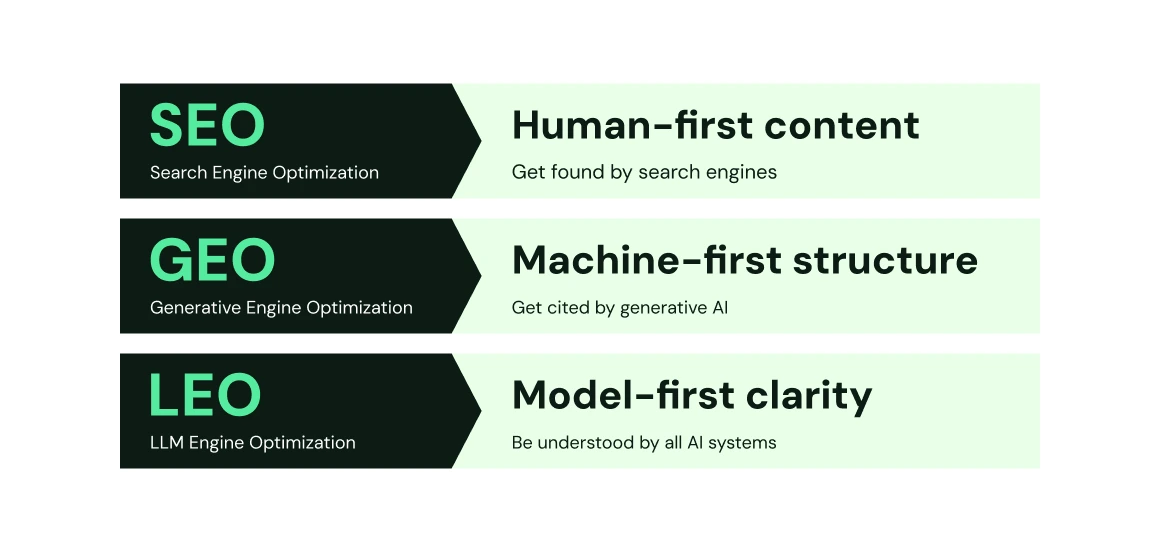
The decline in traditional clicks, while concerning, hides a more important truth: AI-influenced traffic converts better. Studies say visitors who arrive via an AI-generated recommendation can be up to 4.4 times more valuable than standard search visitors because they come withhigher trust and stronger intent(Semrush, 2025). A 2025 B2B Benchmark Report supports this shift in behavior: leads that mention AI-generated product suggestions during form submissions or demos convert 34% faster and are 2.3 times more likely to reach the pipeline stage than traditional SEO-driven leads (ZoomInfo, 2025). This reinforces the case for apeople-first LEO strategy — one built on transparency, usefulness, and digital trust. You can’t game an AI whose objective is to serve users. The only path forward is to align with that goal: delivering themost helpful, accurate, and authoritative content. By focusing on your audience’s true questions and pain points, you signalreal-world expertise— something LLMs are increasingly trained to detect and prioritize. The result is not just higher visibility in AI-generated answers, but along-term strategic asset: your brand’s reputation as a definitive, trustworthy voice in your market.
LEO impacts your visibility across a new and growing ecosystem of “answer engines.” The most prominent examples as of mid-2025 include:
A successful LEO strategy translates this people-first principle into five core actions.
LLMs are designed to prioritize content that demonstrates Experience, Expertise, Authoritativeness, and Trustworthiness (E-E-A-T). Action: Go beyond generic content. Publish proprietary data, unique industry analysis, and case studies that showcase your firsthand experience. Feature named authors with credible backgrounds and link to their expert profiles.
Your expertise must be clear to a machine. Action: Use a logical heading structure, short paragraphs, and bulleted lists. ImplementSchema Markup—a type of code that acts as “invisible labels” to explicitly tell an AI what your content is about (e.g., this is an FAQ, this is a product review).
LLMs understand the world through “entities”—specific people, places, brands, and concepts. Action: Strengthen your brand as an entity by ensuring your company name and details are consistent across the web. Focus on earningbrand mentions in reputable third-party content like news articles and industry blogs, such as these signals.
Users turn to AI for answers, not essays. Action: Dedicate content to answering the specific, conversational questions your customers are asking. Use tools to find “People Also Ask” queries and forum discussions on sites like Reddit and Quora, and then create the best, most comprehensive answers.
An LLM’s understanding of your brand is not limited to your website. It synthesizes information from your entire digital footprint. Action: Actively monitor and manage your online reputation. Your customer reviews, news coverage, and social media presence all contribute to the AI’s perception of your trustworthiness. Engaging positively across these platforms is a core LEO activity.
/ul>
LEO isn’t just a content checklist — it’s a cross-functional business strategy. It requires collaboration between yourSEO, content, PR, and internal subject matter experts. The goal isn’t just to publish more content; it’s to build public authority that AI tools can recognize and rely on. LEO should be seen not as a marketing expense, but as a strategic investment in your company’s AI-era reputation.
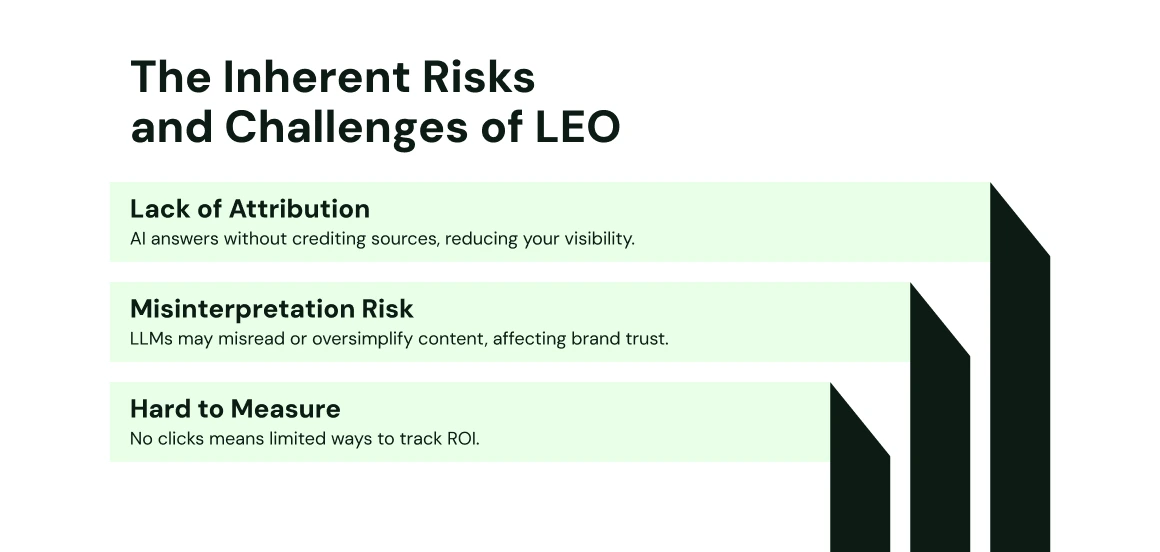 เช่นเดียวกับศาสตร์ที่เกิดใหม่ LEO มีความท้าทาย:
แม้ว่าจะท้าทาย แต่การวัดผลไม่ใช่เรื่องที่เป็นไปไม่ได้ ความสำเร็จจึงอยู่ที่การเปลี่ยนจากคลิกตรงไปยังกิจกระทบและอำนาจคำถามหลัก (KPIs) ควรรวมถึง:
การกำหนด LEO อย่างมีประสิทธิภาพต้องมองไปข้างหน้า AI มีแนวโน้มเป็นมัลติ-โมเดียลมากขึ้น หมายความว่า มันวิเคราะห์มากกว่าแค่ข้อความ — มันเข้าใจภาพ วิดีโอ และเสียง (Google AI). การเพิ่มประสิทธิภาพรูปแบบเหล่านี้คือขอบเขตถัดไป ซึ่งรวมถึง: For Videos: การให้คำอธิบายเป็นข้อความที่ละเอียดและบทถอดคำFor Images: ใช้ alt-text ที่อธิบายอย่างละเอียดและชื่อไฟล์ที่อธิบายสิ่งที่ภาพแสดงFor Podcasts: เผยแพร่ถอดคำเต็มที่ AI สามารถอ่านได้
LEO ไม่ใช่เรื่องการมองเห็นอย่างเดียว มันคือการเป็นแหล่งความจริงที่เชื่อถือได้ในอุตสาหกรรมของคุณ มันให้รางวัลกับเนื้อหาที่มีความน่าเชื่อถือ มีประโยชน์ และมีผู้เขียนที่ชัดเจน ไม่ใช่แค่คลิกได้ แบรนด์ที่ปรับตัวจะไม่ใช่แค่รอดชีวิต แต่จะเติบโตเป็นคำตอบที่ไปถึงจุดสนใจ ไม่เพียงแต่ในเครื่องมือค้นหา แต่ในใจของ AI และผู้ใช้งาน. Works Cited
รับรายงานและข้อมูลเชิงลึกใหม่ๆ จาก KKBC ทางอีเมล
 TH
TH 

 TH
TH